
Skip to content
AnalogFixerDarkroom chemistry for black-and-white film
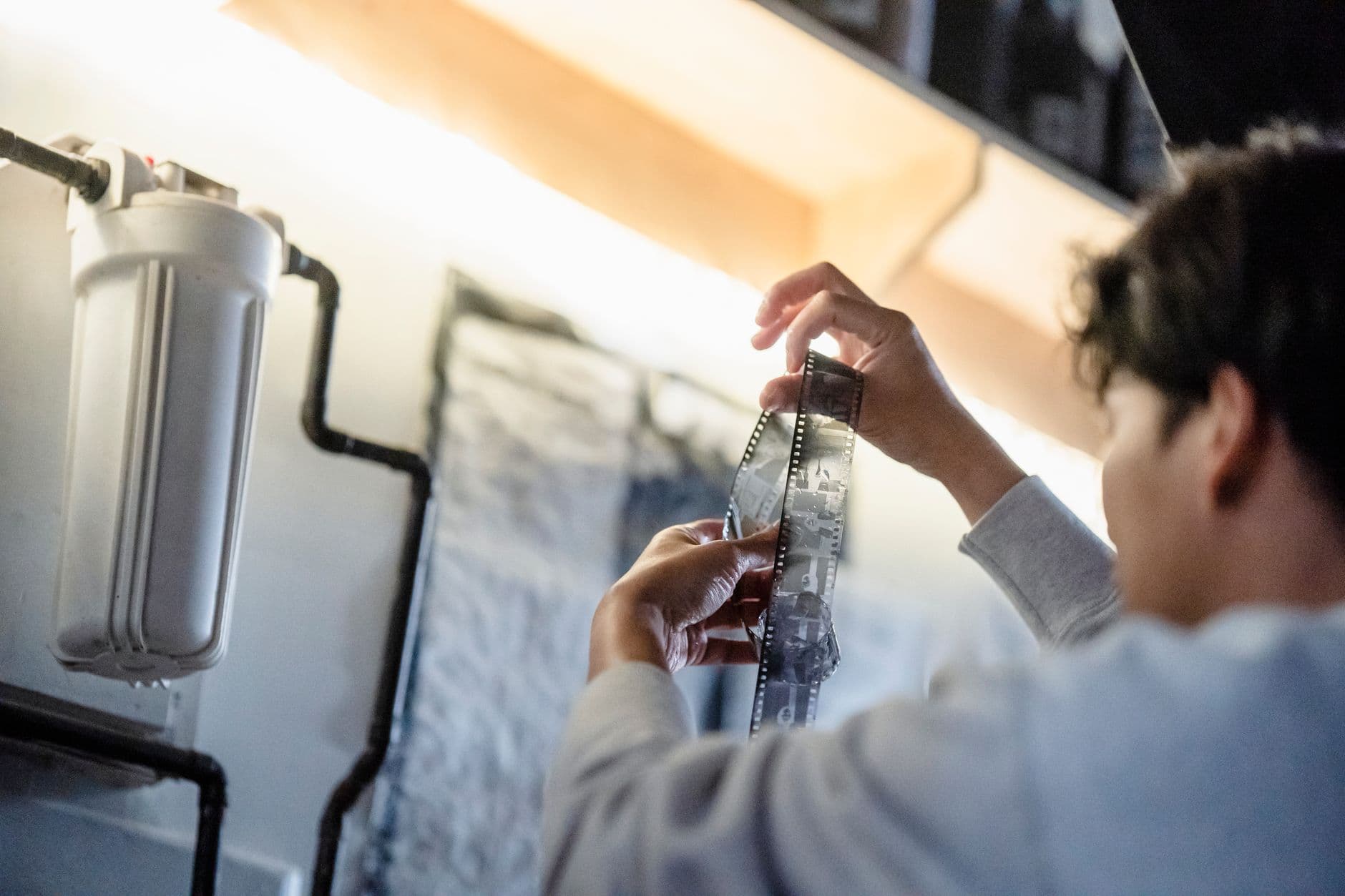
Hand holding a roll of black-and-white film in a darkroom.
Photo by Annushka Ahuja on Pexels

AnalogFixer

Darkroom chemistry for black-and-white film

Ilford and Kodak both publish good technical sheets, and they disagree. This publication sets the figures beside each other, names the product and revision behind each one, and works out which applies when.

What this publication does

Film chemistry is documented, but the documentation is badly distributed. The authoritative literature is out of print and unsearchable. Manufacturer sheets are primary sources and genuinely good, but they are written per product rather than comparatively, and they change between revisions without announcement. Forums hold decades of real experience sitting next to confident folklore, with nothing to tell the two apart.

So the work here is reconciliation. Published figures are set against each other with the product, formulation and revision each came from, and the explanation is why two sources differ rather than a vote on which one wins. Where a statement concerns handling, dilution, storage or disposal, it cites a current Safety Data Sheet by revision date. Where the published evidence stops, the article says so instead of filling the gap.

Latest articles

  • Developer and fixer chemistry

    AJ-3 names Rapid Fixer film 1:3 and paper 1:7 — E-103CF’s Rapid row does not

    Shows that Kodak AJ-3 (February 2016) publishes “Dilute 1:3 for film and 1:7 for paper” for Rapid Fixer (and the same pair for KODAFIX), while E-103CF (© 2010) gives Rapid Fixer’s typical dilution only as “1:3 plus Part B (hardener)” with no paper fork in that cell or in the Rapid description block; that E-103CF’s KODAFIX description carries the film/paper split the Rapid block lacks; and that the Kodak Rapid Fixer pack-in (© Kodak 2015, code 20370811) separates film and paper preparation charts in which the paper chart lists half the Solution A — and half the Solution B — of the films-and-plates chart at the same final volume, the arithmetic of 1:7 versus 1:3 for Solution A, without printing AJ-3’s 1:7 label.


  • Sensitometry

    Contrast Index, BETA, and average contrast name different targets

    Sets Kodak F-4017’s numeric Contrast Index 0.56 starting-point claim, J-86’s 0.60-for-T-MAX-400 / 0.56-for-other-films split under T-MAX Developers, J-109’s CI-column matrix (0.56 on Kodak box-speed rows; 0.58 on Ilford box-speed rows under XTOL), F-4016/F-4043’s non-numeric diffusion-enlarger contrast wording, ADOX CHS 100 II’s BETA 0.65 medium-contrast column, and Ilford FP4 Plus / HP5 Plus qualitative “average contrast” language side by side as incompatible published contrast-target kind of claimes.

  • Developer and fixer chemistry

    Hypam’s hardener doubles film fixing time — and discourages its own use

    Sets Ilford Rapid Fixer’s absolute hardener ban beside Hypam’s optional hardener path in the August 2002 Hypam fact sheet, shows that the same Hypam sheet doubles average minimum film fixing time at 20°C from 2–5 to 4–10 minutes when hardener is used and states that higher hardener doses reduce fixing and washing efficiency, and records that Multigrade FB Classic (October 2013) independently rejects hardening fixers for paper because they reduce washing efficiency while naming both Rapid Fixer and Hypam as non-hardening products.

  • Developer and fixer chemistry

    ILFOSTOP PRO is specified on fixer sheets — Chemical Sundries does not document it

    Shows that Ilford Rapid Fixer (July 2010; same structure in August 2002) and Hypam (August 2002) embed an ILFOSTOP / ILFOSTOP PRO stop-bath pair, publish different unreplenished capacities for the two products, and state that “ILFOSTOP PRO is recommended for all machine processing applications,” while the December 2017 Chemical Sundries sheet that is Ilford’s dedicated stop / wetting / washaid product document lists only ILFOSTOP, ILFOTOL and Washaid, publishes the ILFOSTOP capacities that match the fixer-sheet ILFOSTOP column, and says ILFOSTOP “is not recommended for machine processing applications” because of residual dye-stain risk — without naming or tabulating ILFOSTOP PRO; that the March 2002 2000RT machine-chemistry sheet tabulates only ILFOSTOP PRO (temperature band 20–40°C, RC capacity 90 sheets/litre); and that Multigrade FB Classic (October 2013) names only ILFOSTOP in its dish/tray processing summary.

  • Process control

    J-86 keeps two T-MAX 100 time rows under different product names

    Shows that Kodak J-86 December 2017 publishes two different development-time rows for T-MAX 100 under the labels “T-MAX 100 Professional” and “PROFESSIONAL T-MAX 100” in the same T-MAX Developer and T-MAX RS tables, that those rows disagree at overlapping temperatures, and that F-4016’s matching T-MAX Developer and T-MAX RS cells for current PROFESSIONAL T-MAX 100 Film agree only with the PROFESSIONAL-named rows — so a quoted “J-86 T-MAX 100 time” has to name which product-line label the row carries.

  • Archival permanence

    Print LE-100 no longer names 21 °C and 50 % RH

    Shows that ISO 18929:2003 defined life expectancy and the LE designation by dark storage at 21 °C and 50 % RH — the same ambient pair ISO 18901:2010 still prints for film — while the 2012 second edition of ISO 18929 replaces those figures with “conditions defined in the relevant standards,” naming ISO 18902 and ISO 18920 in a note, so an LE-100 label for a reflection print under the current print standard is no longer, on the face of the definition examined here, the same storage claim as LE-100 under the film standard or under the prior print edition.

  • Archival permanence

    Published sheets disagree on what selenium toner protects

    Shows that Kodak G-23 claims toning extends print-image life during display or storage against light, ultraviolet radiation, oxidizing gases and related hazards, and labels a Rapid Selenium Toner dilution for “print protection,” while Ilford Multigrade FB Classic puts selenium in an “optimum permanence” sequence framed for “archival storage” and then scopes toning to display protection from oxidising gases on the same sheet; that Ilford Chemical Sundries defines optimum permanence as residual-silver and thiosulfate minima and publishes a non-selenium path for that definition; that Kodak AJ-3 shortens the product claim to tone change and “prolonging print life”; and that ISO 18929’s LE-100 print criteria are dark-storage residual and physical limits that include toned prints in scope without requiring toning, exclude displayed prints, and deprecate “archival.”

  • Archival permanence

    Status A blue density is not one permanence ceiling

    Shows that three ISO permanence clauses examined here that all use Status A blue densitometry publish three different numeric ceilings for three different tests: ISO 18901:2010 Clause 6.5 caps residual silver compounds on film at a 0,02 Status A blue density increase; Clause 7.2 caps radiographic-film image-stability change after incubation at 0,05 Status A blue density units for LE-10, LE-100 and LE-500 alike; and ISO 18929:2012 Clause 6.3 caps print yellowing after incubation at 0,08 Status A blue density units on minimum-density areas — so a quoted Status A blue permanence number has to name which clause and material it came from.

Browse every article by section below, or start from the editorial standards that govern what publishes here.

The fixer calculator

One thing on this site is not an article. The fixer calculator works out dilutions, converts a count of prints into the silver actually sitting in the bath, and reports it against each of the four separate limits Ilford publishes — which are four, not one, and which is exactly where the fact sheet catches people out. Its headline capacity of forty 8×10 prints per litre turns out to be the same number as the commercial-permanence limit printed two pages later, leaving no archival headroom underneath it at all.

Every figure in it is read off a named sheet at a named revision. Where Ilford publishes nothing — silver per roll of film, an archival limit for resin-coated paper — the calculator says so rather than interpolating a plausible number.

Sections

  • Developer and fixer chemistry

    What the agents in a developing and a fixing bath do, what each manufacturer specifies for them, and what to make of it when two sheets for the same task disagree.

  • Process control

    Time, temperature, agitation, dilution and capacity: the variables that decide whether a roll processed this month matches one processed last month.

  • Archival permanence

    What properly fixed and washed means in measurable terms, which standards define it, and what the published limits actually apply to.

  • Sensitometry

    Characteristic curves, density measurement and the published data sitting behind box speed, development time and contrast index.